
bell’s palsy: what you need to know
WHAT IS BELL’S PALSY?
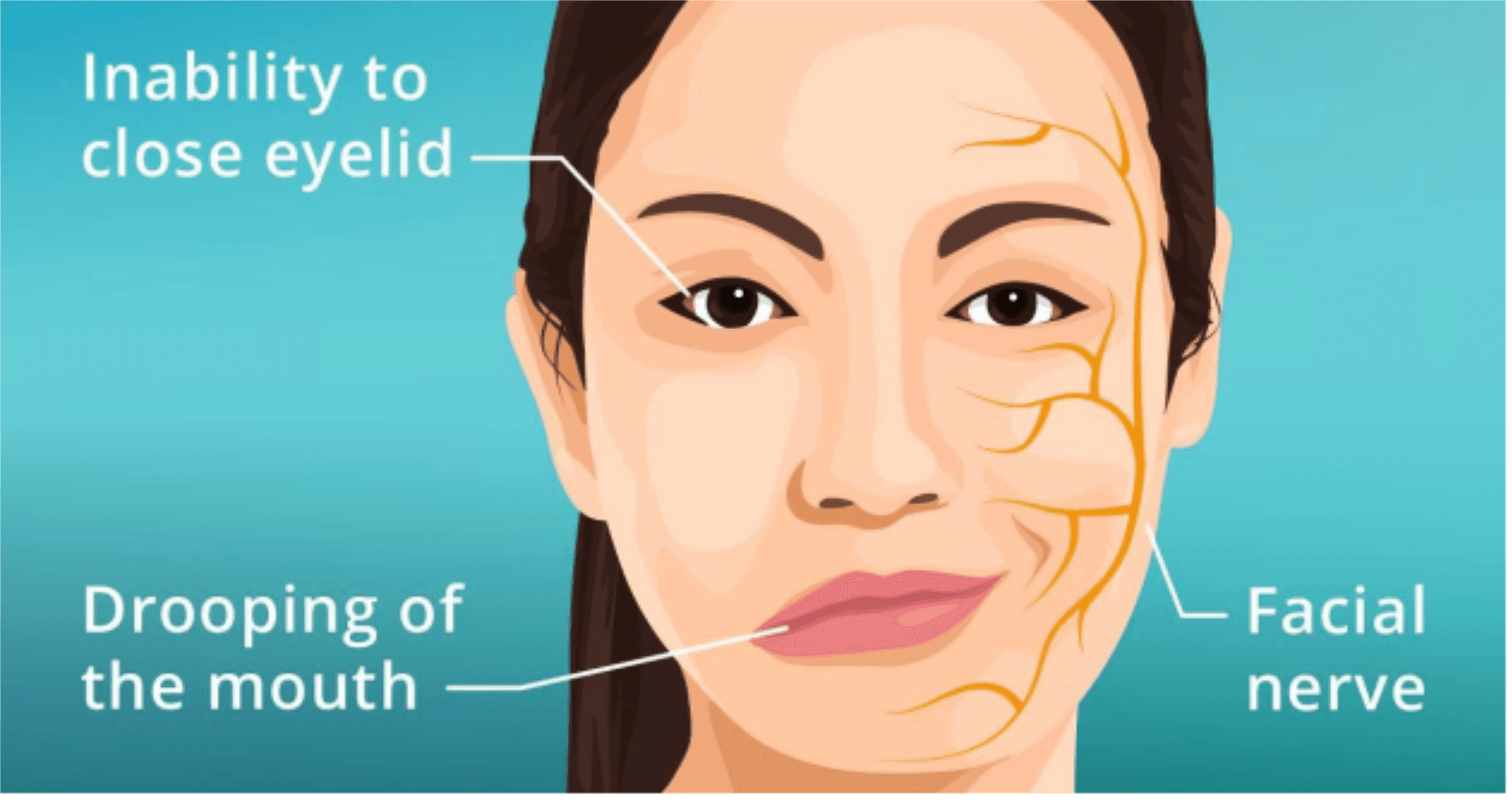
Bell’s Palsy, also known as acute peripheral facial palsy, is a condition that causes sudden weakness in the muscles on one side of the face. As a result, one side of the face is partially or completely paralyzed, causing asymmetry. The facial nerve controls the muscles in your face. The right and left sides of the face each have their own nerve. This nerve has several branches, which allow movement in the forehead and eyebrows, including the ability to blink and close the eyes. Furthermore, the nerve controls the muscles around the mouth and nose.
WHAT ARE THE SYMPTOMS?
Symptoms include:
- Mild weakness to total paralysis on one side of the face — occurring within hours to days.
- Facial droop and trouble making facial expressions, such as closing an eye or smiling.
- Drooling.
- Pain around the jaw or pain in or behind the ear on the affected side.
- Increased sensitivity to sound on the affected side.Headache.
- Loss of taste.
- Changes in the number of tears and saliva produced.
WHAT IS THE CAUSE?
Although there is no direct cause of Bell’s Palsy, the condition is often linked to viral infections. Viruses that have been linked to Bell’s palsy include viruses that cause:
- Cold sores and genital herpes, also known as herpes simplex.
- Chickenpox and shingles, also known as herpes zoster.
- Infectious mononucleosis, caused by the Epstein-Barr virus.
- Cytomegalovirus infections.
- Respiratory illnesses, caused by adenoviruses.
- German measles, also known as rubella.
- Mumps, caused by the mumps virus.
- Flu, also known as influenza B.
- Hand-foot-and-mouth disease, caused by a coxsackievirus.
The nerve that controls facial muscles passes through a narrow corridor of bone on its way to the face. In Bell’s palsy, that nerve becomes inflamed and swollen — usually related to a viral infection.

HOW IS A DIAGNOSIS MADE?
The doctor will make the diagnosis based on your history, how the symptoms developed, and the results of a physical examination. Symptoms usually develop very quickly, within 1 to 2 days. Symptoms can become even worse in the first few days. During the physical examination, the doctor will check for facial features:
- Fewer forehead wrinkles;
- Eye(s) appearing wider;
- Mouth drooping.
The doctor will also check whether facial muscles are functioning by asking:
- Can you raise your eyebrows;
- Smile;
- Purse your lips;
- Show your teeth?

WHAT TREATMENT OPTIONS ARE AVAILABLE?
Most people with Bell’s palsy recover fully — with or without treatment. Treatment can vary for patients. However, a healthcare professional may suggest medicines or physical therapy to help speed recovery, depending on the severity. Surgery is rarely an option for Bell’s palsy. Commonly used medicines to treat Bell’s palsy include:
- Corticosteroids: such as prednisone (Rayos, Prednisone Intensol). Steroids started early improve the likelihood of complete recovery.
- Antiviral drugs: Antivirals added to steroids may benefit some people with Bell’s palsy, but this is still not proved.
Physical Therapy
To prevent paralyzed muscles from becoming shrunken and shortened, physical therapy can help through facial massages and exercises.
Eye care
Because the eye on the affected side does not close, it’s important to take steps to protect and care for that eye:
- Keep the eye lubricated and moist.
- Wear glasses or goggles during the day and an eye patch at night to protect the eye from getting poked or scratched.
Most patients with Bell’s palsy improve within three months. If this does not happen, further neurological examination is necessary. This is usually performed with an MRI.
COMPREHENSIVE AND COMPASSIONATE CARE
At SMMC, our goal is to improve your quality of life through personalized, compassionate care. From diagnosis to treatment, we are here to support you every step of the way. For more information, please contact the Neurology Department using the information on the back of this brochure.