
bone marrow biopsy
WHAT IS A BONE MARROW BIOPSY AND WHY DO I NEED ONE?
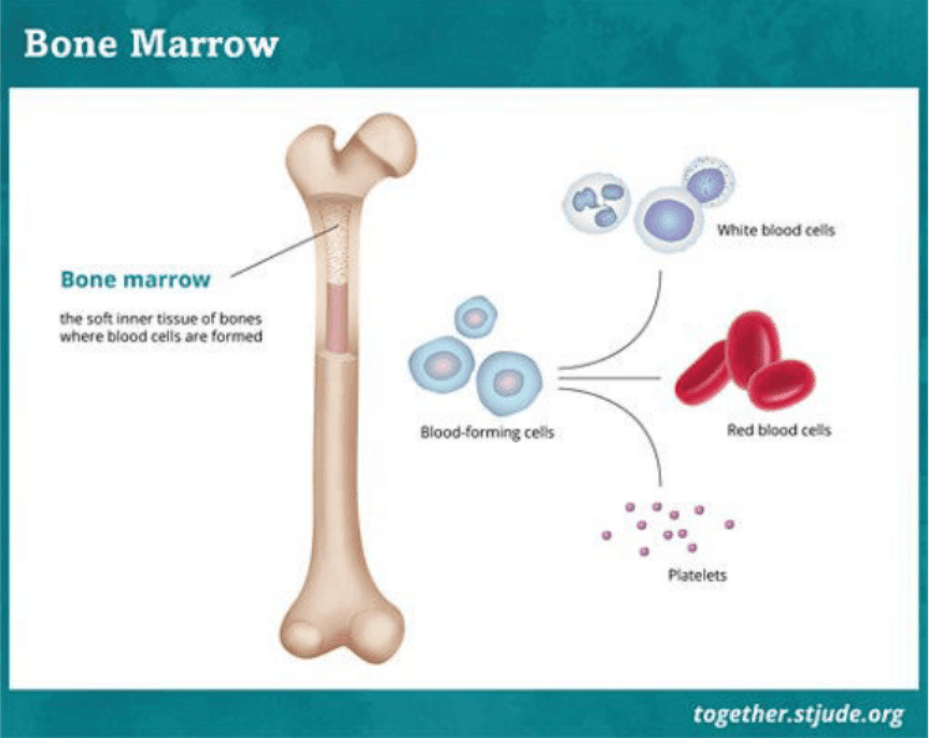
Bone marrow is the soft, spongy tissue inside our large bones, where all blood cell production occurs. Many blood disorders originate in the bone marrow and a bone marrow biopsy (also called bone marrow trephine) allows the Hematologist, Oncologist or Pathologist to look directly at these cells to make a diagnosis or to determine if a disease elsewhere in the body is also affecting the bone marrow.
WHAT DOES THE TEST INVOLVE?
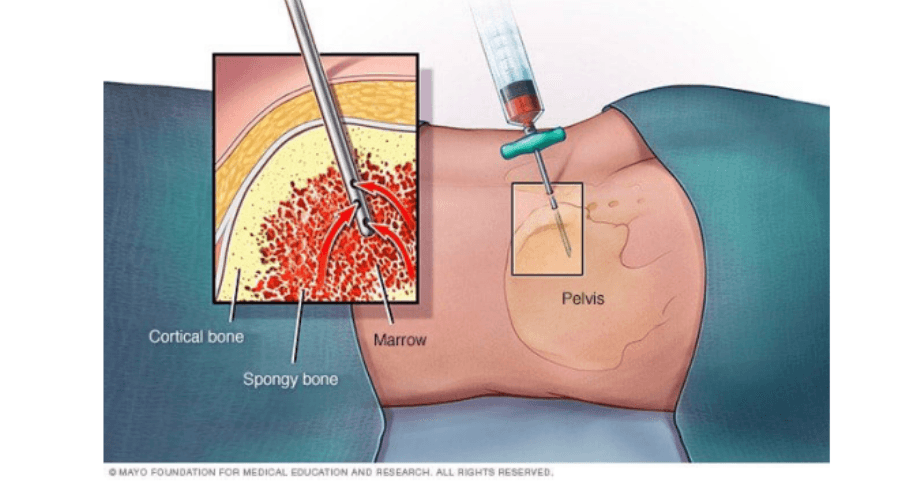
During this test, under local anesthetic, a needle is passed into the bone marrow space, usually through the back part of your hip bone. A sample of the bone marrow is taken through a syringe and a hollow needle, then the site is covered with a sterile dressing.
IS IT PAINFUL?
It can be painful to have a bone marrow biopsy taken. To alleviate pain as much as possible, a local anesthetic is used to make the site numb. Sometimes the site of the biopsy is sore for a few days afterwards, but this is usually well controlled with simple pain relief such as paracetamol.
WHERE DO I HAVE TO GO?
Outpatient bone marrow biopsies are performed in the IV therapy suite.
The biopsy is normally scheduled at 3:30 pm (15:30). Be present at 3:00 pm (15:00) to prepare everything for the procedure. If you are currently admitted to the hospital, this will take place in your room. A laboratory technician will be present to process the materials and prepare them for transport to Curacao or the Netherlands.
WHAT DO I HAVE TO BRING WITH ME?
- Valid ID;
- Insurance details;
- A comprehensive list of all medications, supplements and allergies.
If you are not currently admitted and conducting your test, you should wear comfortable clothes with a loose-fitting waistband.
CAN I EAT, DRINK AND TAKE MY USUAL MEDICATIONS?
As the procedure is in the afternoon, you can have a light lunch and you can drink non-alcoholic drinks as normal. It is important to mention the medications you are taking, especially those that influence clotting such as aspirin or anticoagulants (Coumarins, Eliquis, Xeralto, Dabigatran). Medications taken in the morning can be taken without a problem unless otherwise indicated.
WHO PERFORMS THE TEST?
The procedure is performed by a doctor who is a specialist in blood disorders (Hematologist/Oncologist). The doctor is often assisted by a nurse and a technician from the laboratory.
HOW LONG DOES IT TAKE?
Bone marrow biopsies are performed in the afternoon on Tuesdays and the procedure typically takes about 30 minutes (including all preparations).
WHAT HAPPENS TO ME DURING THE PROCEDURE?
The most common site for biopsy is the back of the hip, about where your thumb would be if you put your hands on your hips. To prevent pain as much as possible, you'll receive a local anaesthetic to numb the site of the biopsy to keep you comfortable. If you feel anxious about the pain, you can ask your doctor to give you a sedative to relax you. You are asked to lie on your side (mostly your right side) with your knees bent as much as possible towards your nose to perform the puncture at the left side of the pelvis. If this is a problem in your situation, please mention it.
The area where the doctor will insert the biopsy needle is marked, cleaned and draped with a sterile cloth. The doctor then makes a small 3–4 mm incision to make it easier to insert the needle. A hollow needle is inserted through the bone and into the bone marrow. You will feel pressure in the numbed region but no pain. If you experience pain, please mention it as extra anaesthetic can be given in the deeper layer. After positioning the needle in the bone, bone marrow blood is aspirated (drawn). During aspiration, most people experience a very strange (many experience it as painful) feeling that cannot be taken away by the anaesthetic. It lasts only a fraction of a second during the suction but will return with the next suction and two to four suctions are needed depending on the indication of the bone marrow. After the aspiration, the doctor will continue to perform the biopsy by positioning the same needle deeper into the bone. You may feel pressure, aching and some movement and it can be painful in the end. The needle is then removed with a turning motion to retrieve the sample that is stuck in the hollow needle.
WHAT HAPPENS AFTER THE PROCEDURE?
After your bone marrow biopsy, pressure is applied to the area where the needle was inserted to stop any bleeding. This is done by applying a stack of gauze at the puncture spot and you will be asked to lie flat on it to apply pressure. You'll be asked to lie on your back for 15 to 30 minutes depending on the complexity of the procedure and your medication. You can then leave and return to normal activity as soon as you feel up to it. It is advisable to have someone drive you home after the procedure.
HOW DO I CARE FOR THE BIOPSY SITE?
Keep the bandage on and dry for 24 hours. Do not take a shower or bath and do not swim or use a hot bath or spa for 24 hours. After 24 hours, it's OK to get the aspiration and biopsy area wet. If bleeding soaks through the bandage or doesn't stop with direct pressure, contact the Oncology Department using the information located on the back of this brochure or call the Emergency Department. You should also contact your doctor if you experience:
- A persistent fever;
- Worsening pain or discomfort;
- Swelling at the procedure site;
- Increasing redness or drainage at the procedure site.
CAN I EXERCISE AFTERWARDS?
Although you can often return to your normal activities after a bone marrow exam, avoid rigorous activity or exercise for a day or two. This will help minimize bleeding and discomfort.
ARE THERE ANY RISKS OF A BONE MARROW BIOPSY?
All procedures carry some level of risk, however, bone marrow biopsies are safe procedures performed by experienced doctors. That being said, the following risks have been reported:
- Bleeding. Bleeding can occur at the site of biopsy; however, pressure is applied after the procedure to reduce this risk. Constant oozing that is not resolved with pressure should be reported to your doctor. It is rare, but the biopsy site can become infected.
- Fevers, sweating and general feelings of unwellness. Fevers, sweating and general feelings of unwellness in the days after the procedure should always be reported immediately. The risk of these is reduced by being careful to keep the wound clean and dry afterwards.
- Pain at the biopsy site. Pain at the biopsy site is not uncommon and can persist for several days. Some people describe the sensation as a dull ache and some like a “bruise on the bone”. Simple measures such as paracetamol pain relief are usually all that is required.
The overall risk of any of these complications occurring is about 1 in 1000, with pain being the most common problem. There are additional risks associated with sedation and these risks will be discussed with you by your doctor.
WHEN DO I GET THE RESULTS?
Most results are available within 7–8 working days. Complex tests such as molecular tests or cytogenetics (DNA tests) can take many weeks. Your doctor will advise you on when you can expect your results based on the type of testing.