
carpal tunnel syndrome: what you need to know
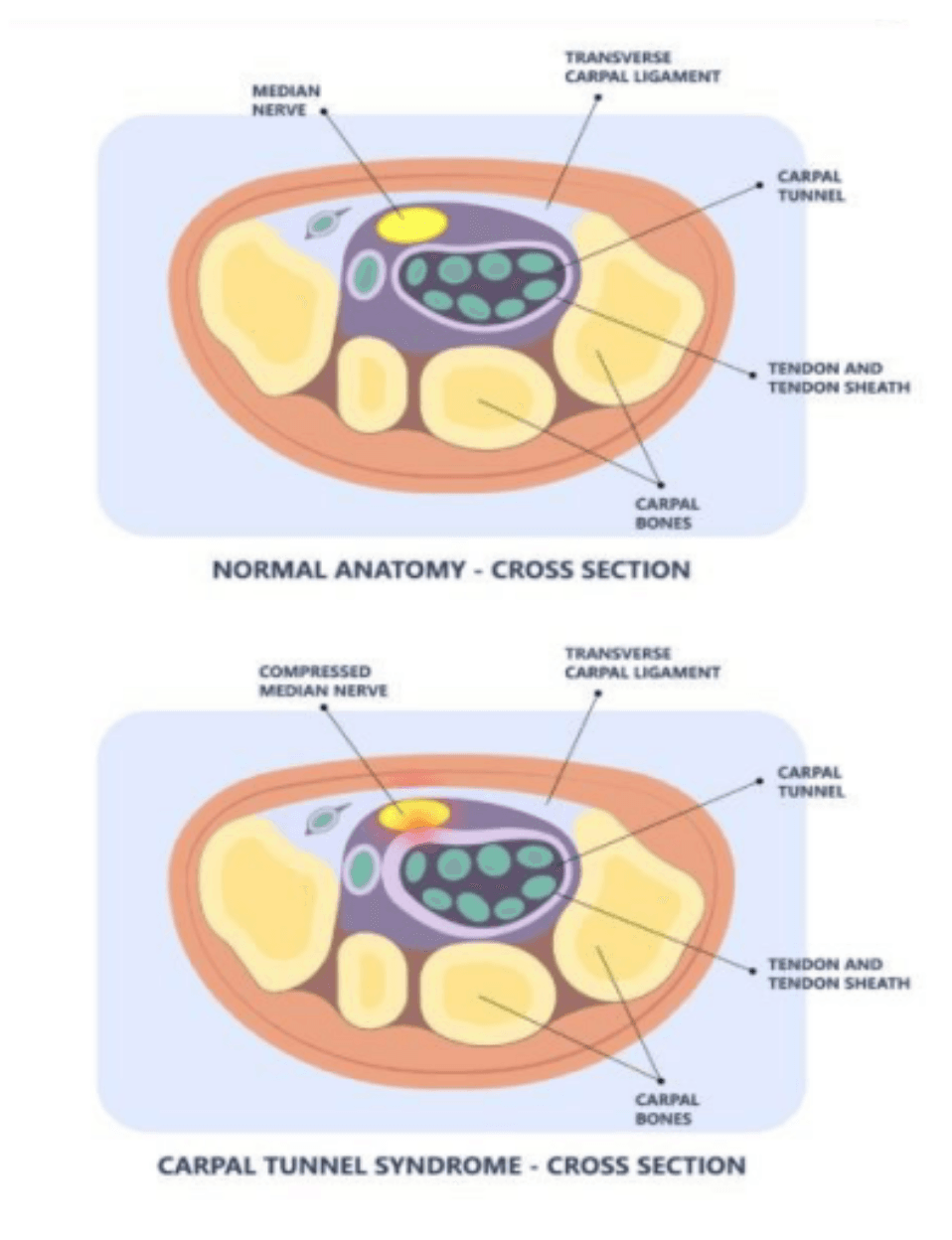
WHAT IS CARPAL TUNNEL SYNDROME?
Carpal tunnel syndrome is one of the most common hand conditions. It is caused by pressure on the median nerve in the carpal tunnel of the wrist. The carpal tunnel is a narrow passageway surrounded by bones and ligaments on the palm side of the hand.
WHAT ARE THE SYMPTOMS?
Symptoms of CTS include:
- Tingling
- Pain
- Numbness in the hand and fingers
Patients may also have reduced strength in their hand. The symptoms often occur at night or early in the morning. Patients also regularly experience the symptoms in both hands.
HOW IS IT DIAGNOSED?
CTS can be diagnosed through a combination of physical examinations, symptom assessments, and diagnostic tests to evaluate the median nerve’s function.
Physical examination
- Tapping or pressing on the median nerve
- Flexing the wrist
- Testing sensation and muscle strength
System assessment
- Numbness and tingling
- Pain
- Weakness in the hand
Diagnostic Tests
- Electromyography (EMG)
- Ultrasound
- X-rays
Early diagnosis and treatment are crucial to prevent nerve damage. If symptoms are present, it is advisable to consult with a healthcare professional immediately.
PREVENTION
Treating CTS as early as possible minimizes the risk of nerve damage. In the early stages, symptoms are likely to go away on their own through these lifestyle practices:
- Take more frequent breaks when operating with hands
- Limit activities that make existing symptoms worse
- Use cold packs to reduce swelling
WHAT TREATMENT OPTIONS ARE AVAILABLE?
If symptoms persist, a healthcare professional may recommend the following:
Wrist splint:
Wearing a splint or brace at night gives your wrist and hand rest, holding it in place by preventing unnecessary movement that can result in pain.
Injection:
A doctor will administer an injection in your wrist containing a combination of anesthetic and an anti-inflammatory medicine. This helps decrease inflammation and swelling, which relieves pressure on the median nerve. Sometimes an ultrasound is used to guide the injection.
Surgery:
In cases where surgery is necessary, the doctor creates more space for the nerve in the wrist. Patients have a better chance of complete symptom resolution than with an injection or a splint. However, surgery does not guarantee complete recovery. During the healing process, the ligament tissues gradually grow back together while allowing more room for the nerve. This internal healing process typically takes several months, but the skin heals in a few weeks.
COMPREHENSIVE AND COMPASSIONATE CARE
At SMMC, our goal is to improve your quality of life through personalized, compassionate care. From diagnosis to treatment, we are here to support you every step of the way. For more information, please contact the Neurology Department using the information on the back of this brochure.