
cervical radicular syndrome (hnp): what you need to know
WHAT IS CERVICAL RADICULAR SYNDROME (HNP)?
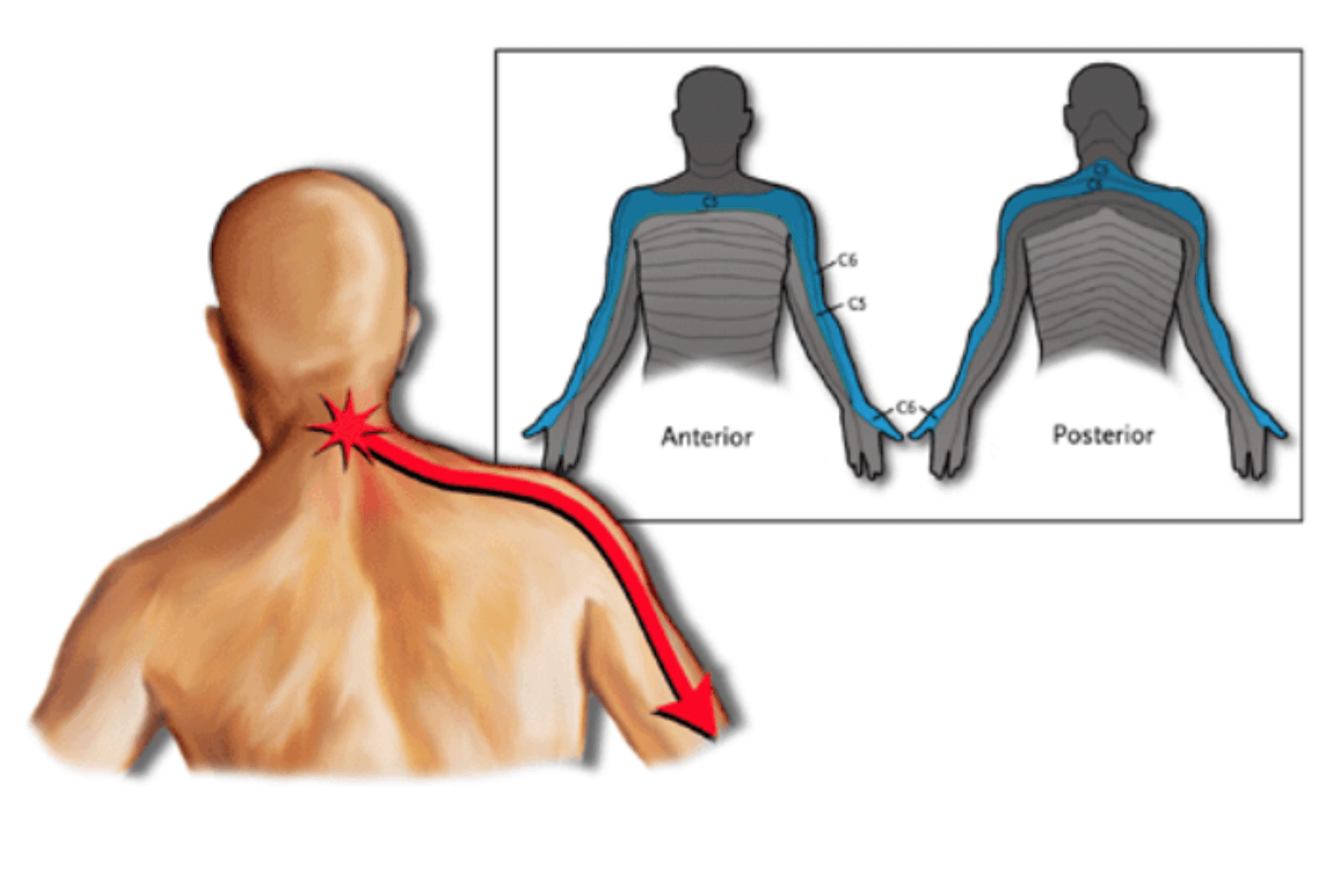
Cervical Radicular Syndrome, also known as hernia nuclei pulposi, is a condition where a herniated nucleus pulposus of an intervertebral disc compresses or irritates a spinal nerve root. This can lead to symptoms such as neck and arm discomfort, parasthesias, or numbness, often provoked by neck movements or positioning. The most commonly affected nerves are the C6 and C7 nerves in the cervical spine.
WHAT ARE THE SYMPTOMS?
Cervical Radicular Syndrome, often associated with cervical herniated nucleus pulposi, can present with a variety of symptoms, which may include:
- Neck pain: Typically felt as tenderness or sharp, burning pain, often worsening with certain head positions.
- Radicular pain: This pain can radiate down the shoulder, arm, hand, and/or fingers, sometimes described as hot or electric shock-like.
- Cervical radiculopathy: This condition can cause numbness and/or weakness to radiate down into the shoulder, arm, hand, and/or fingers.
- Neck stiffness: Pain and inflammation from a cervical herniated disc may restrict certain neck movements and reduce range of motion.
WHAT IS THE CAUSE?
The following factors can lead to cervical radiculopathy, resulting in symptoms that may radiate pain from the neck down to the arm:
- Herniated Nucleus Pulposus: This occurs when the nucleus pulposus of an intervertebral disc protrudes through a tear in the annulus fibrosus, irritating nearby nerves.
- Degenerative Changes: Age-related degeneration of the cervical spine can lead to herniation, especially in individuals over 30.
- Overexertion: Activities such as heavy lifting or high-impact sports can contribute to the development of a herniated disc.
- Nerve Root Compression: The herniated nucleus can compress or irritate nerve roots, leading to symptoms like pain, tingling, and weakness.
HOW IS THE DIAGNOSIS MADE?
Based on a patient’s symptoms, doctors can make a diagnosis through physical examination. The doctor can then determine if the nerve is compressed. To identify which nerve is affected, the course or route of the radiating pain in the arm is important. Compression, for example due to a herniated disc, can be seen on an MRI or CT scan in more severe cases for further examination. However, imaging is often not necessary to determine that compression is present. Unless surgery is being considered, a scan is usually not required.

WHAT TREATMENTS ARE AVAILABLE?
In most cases, the herniated disc symptoms resolve on their own. However, pain medication can be recommended to relieve the initial symptoms. In other instances, a neurologist may prescribe a semi-rigid cervical collar. It is recommended that patients do not wear the collar for longer than 6 weeks. Because a hernia often resolves on its own, it is important not to rush into surgery. If the symptoms persist and are severe, surgery may be considered.
COMPREHENSIVE AND COMPASSIONATE CARE
At SMMC, our goal is to improve your quality of life through personalized, compassionate care. From diagnosis to treatment, we are here to support you every step of the way. For more information, please contact the Neurology Department using the information on the back of this brochure.