
multiple sclerosis: what you need to know
INTRODUCTION
Multiple sclerosis (MS) is a disease of the brain, optic nerves, and spinal cord. Inflammation occurs in the protective layer (myelin) around the nerve fibers in these areas. These can range from a few millimeters to a centimeter in size. Over time, more and more inflammation develops, and these often harden into scars. Multiple sclerosis literally means “multiple scars.” MS is two to three times more common in women than in men. Most patients develop the disease between the ages of 20 and 50. MS is a common disease.
WHAT ARE THE SYMPTOMS?
The symptoms of patients with MS can vary greatly. This depends on where the inflammation occurs. Common symptoms with MS include:
- Vision problems: Blurred or double vision.
- Problems with movement: Reduced strength in a leg, arm, or hand; a heavy feeling when moving; clumsiness of the hands; stiffness or rigidity when walking; jerking when moving.
- Problems with sensation: Tingling, numbness, or pain in various parts of the body.
- Problems with balance: Dizziness, unsteady gait, easy falls.
- Problems swallowing or speaking – Problems with bladder or bowel control: Frequent urination, inability to hold urine, difficulty urinating, slow bowel movements.
- Problems with sex: (Men) inability to become erect; (women) inability to become lubricated.
- Cognitive problems
- Fatigue
HOW DOES THE DISEASE PROGRESS?
MS is a chronic (long-term) disease. The disease progresses differently for each patient. Some patients experience symptoms for only a short time, which then resolve. One of the following three forms of the disease:
- Relapsing Remitting Multiple Sclerosis (RRMS):This form of MS is the most common. The symptoms occur in attacks (relapses/exacerbations). An attack often develops within a few hours or a few days. It usually takes a few weeks for the symptoms to improve, but sometimes it takes even longer. Especially early in the disease, there is a good chance that patients will recover completely after an attack.
- Secondary Progressive Multiple Sclerosis (SPMS): About 70% of patients with RRMS develop SPMS after a certain period. Attacks then become less frequent. Patients gradually deteriorate.
- Primary Progressive Multiple Sclerosis (PPMS): This is a form of MS in which symptoms progressively worsen from the onset of the disease and there is never a period of improvement. This form is less common.
WHAT IS THE CAUSE?
MS is likely caused by an unfortunate combination of factors. These factors can be divided into two groups:
- Genetic (or hereditary) factors: Hereditary factors play a minor role in MS. There is a slightly higher risk of developing MS if family members also have the disease.
- Environmental factors: Some infections increase the risk of developing MS. Infection with the Epstein–Barr virus is particularly important. This virus also causes mononucleosis.
Furthermore, smoking, insufficient vitamin D, and being overweight in adolescents and young adults are known environmental factors. Due to a combination of hereditary and environmental factors, the immune system becomes unbalanced in some people. Immune cells cause inflammation of the protective layer (myelin) around the nerve pathways in the brain, optic nerve, and spinal cord.
HOW IS THE DIAGNOSIS MADE?
The doctor listens to the patient’s complaints and examines the symptoms. The doctor may then suspect that a patient has MS. To be certain, the doctor will almost always perform an MRI scan of the brain and often also of the spinal cord. This clearly shows the areas of inflammation, their spread, and their activity. In addition, it may be useful to have other tests done, such as:
- Blood tests, especially to rule out other diseases;
- Cerebrospinal fluid tests (a spinal tap is required for this);
- Optic nerve tests.
WHAT TREATMENT OPTIONS ARE AVAILABLE?
There is currently no cure for MS, but it can be managed through new medications. This is especially true for people with RRMS. New medications are increasingly effective.
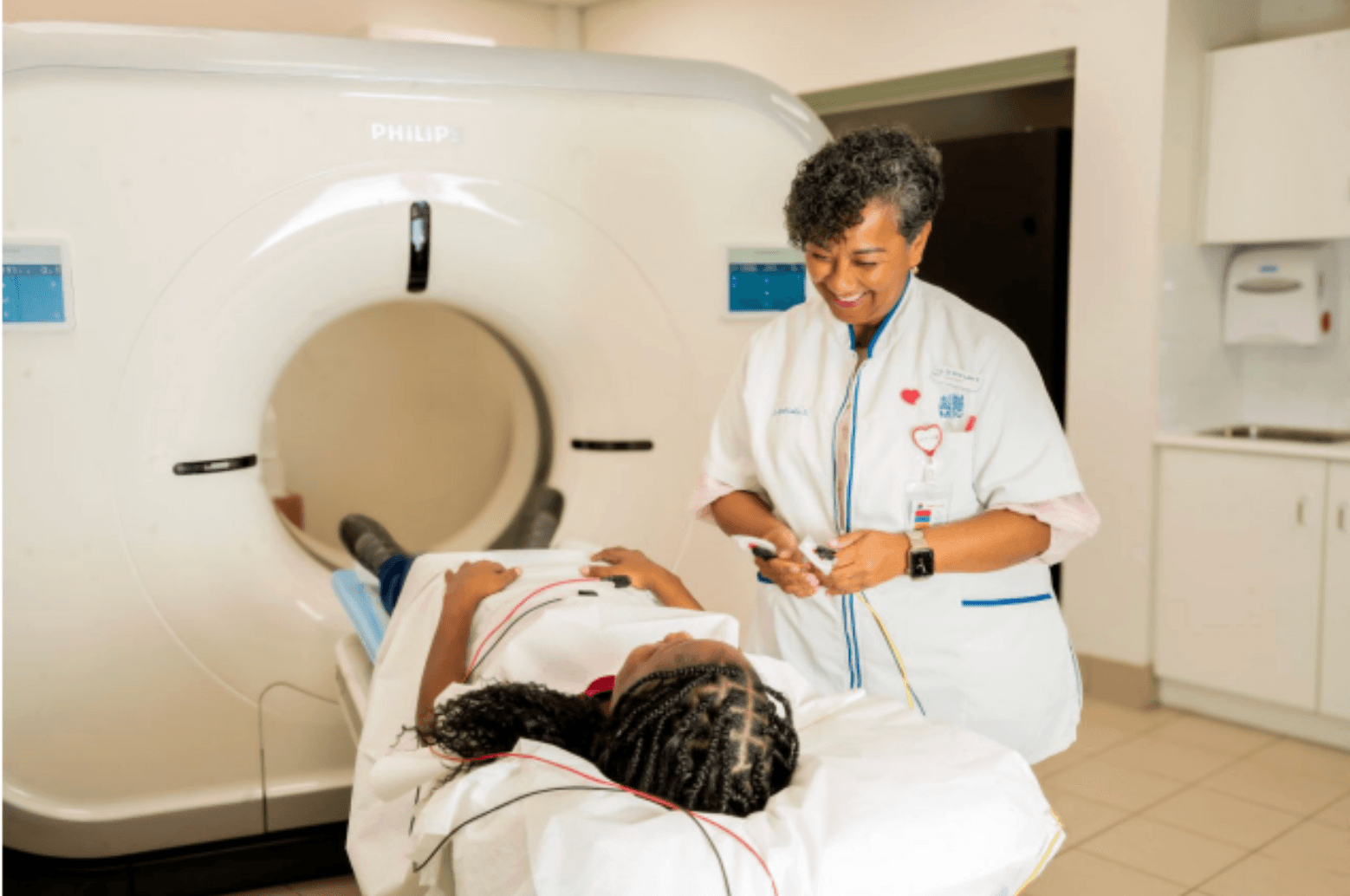
COMPREHENSIVE AND COMPASSIONATE CARE
At SMMC, our goal is to improve your quality of life through personalized, compassionate care. From diagnosis to treatment, we are here to support you every step of the way. For more information, please contact the Neurology Department using the information on the back of this brochure.