
port-a-cath
WHAT IS A PORT-A-CATH?
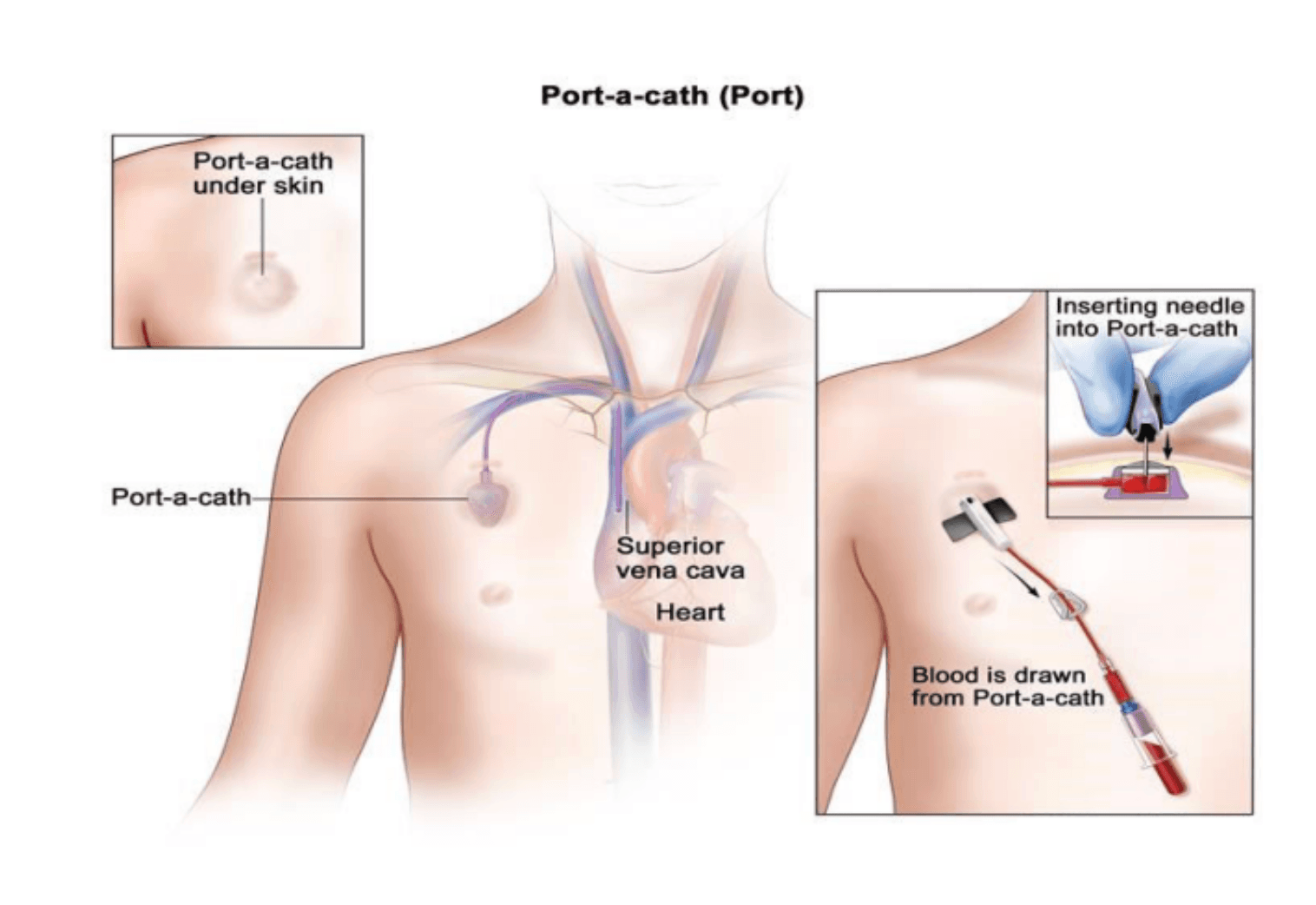
A port-a-cath, commonly referred to as a “port”, is a small device implanted under the skin that allows access to your veins. Ports are used to inject liquids directly into your vein as part of treatment and is usually for people who:
- Receive regular, long-term intravenous treatment; mostly chemotherapy;
- Have small or difficult veins and need regular intravenous treatment;
- Have difficulty with other types of intravenous access such as peripherally inserted cannulas (needles).
One of the advantages of having a port is that it is completely under the skin, with no visible tubing or catheter, when not attached to the port needle. This means you can shower and do your daily activities without having to be concerned about your port.
WHY DO WE USE PORT-A-CATHS?
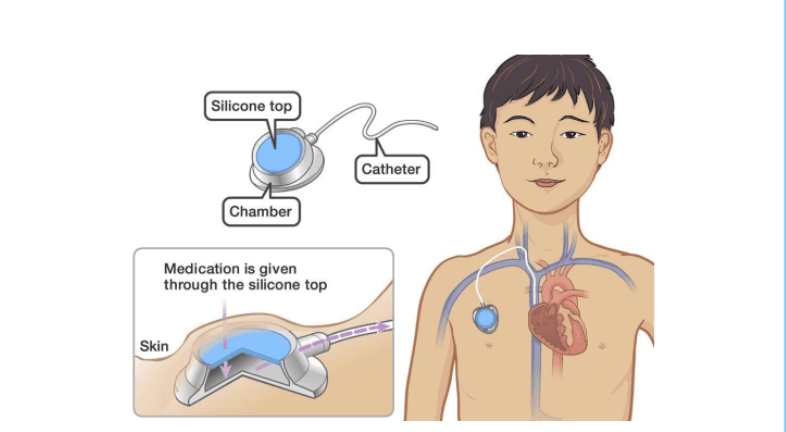
Ports reduce the need to insert needles into the veins in your arms, making chemotherapy (and other IV medication) treatments more comfortable for you. It gives you freedom to use your arms normally in all your daily activities.
HOW IS THE PORT-A-CATH INSERTED?
There are different types of ports. The (vascular) surgeon will discuss the most suitable option for you. Inserting a port is a daycare procedure. You may be asked to come in and stay in the hospital for a short time. You might get general anesthesia or local anesthesia and/or a sedation to make you feel sleepy and relaxed.
THE PROCEDURE
The port-a-cath consist of two parts, a port and a catheter. The surgeon will make two small incisions (cuts), one at the base of your neck and another on your chest below your collarbone. The port is inserted into the incision on your chest. The doctor maneuvers the catheter under your skin below the collarbone or on the chest wall towards the cut at the base of your neck and into the vein. The end of the catheter sits in a large vein and into the blood stream and the implanted port is accessed with a port needle to make sure the port is working properly. The port is stitched with dissolvable stitches to hold it in place and a few sutures are placed over the incisions and covered with wound dressing. The surgeon might ask for an x-ray to make sure the port and tube are in the right place. Once inserted, a port can be used for up to five years.
WILL IT HURT?
You will experience some tenderness or discomfort at the injection site after the insertion. This is usually manageable with oral pain medication such as paracetamol. The discomfort should settle after 2–3 days. After the implantation, you may feel the port as a round (or triangle) shaped bump on your skin where the port is implanted. This is not painful.
ACCESSING YOUR PORT-A-CATH
To access your port for treatment, topical anesthesia cream can be put over the port site to numb the area. This cream is placed at least an hour before the expected port access. Only a well-trained nurse (or clinician) may access and/or use the port.
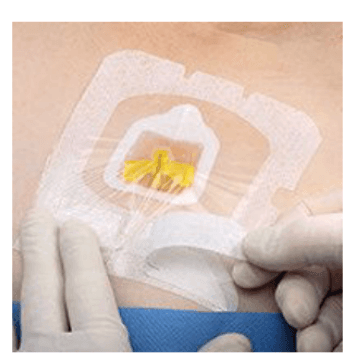
The port will be accessed with a (special) port needle and under a sterile procedure. The port needle is flushed to make sure that the port is working properly. Medication (and in other cases fluids) are given through the port. Because the needle goes through the skin, you will probably feel a pricking sensation. This sensation may decrease over time. The nurse will remove the port needle at the end of the treatment or leave the port in place for continuous medication administering.
If the port needle stays in (port accessed), the nurse will place special dressing and stabilize/immobilize the port needle. The port needle can stay accessed for up to 7 days.
CARE FOLLOWING THE INSERTION OF A PORT-A-CATH
After your port has been inserted, the dressings often remain in place before the port is accessed for the first time. This is to allow any bruising and/or swelling to go down so that it is more comfortable for you. The dressings can be removed if the port-a-cath needs to be accessed within a week.
You should avoid putting pressure on the incision areas, such as wearing suspenders or a tight bra for the first 1 or 2 days as well as avoiding lifting anything heavier than 10 pounds for the first week after your port is implanted.
For the next few days, you need to watch the area around the port-a-cath for any of the following signs:
- Swelling;
- Bleeding;
- Redness;
- Leaking of fluid;
- Pain.
If you feel unwell or a problem arises and you are concerned, contact the clinic immediately. Report anything you feel is not right. Once your port incision is healed (usually this takes about 1 week), you may return to your normal activities.
HOW TO CARE FOR YOUR PORT?
Your implanted port requires minimal care between uses because it is completely under the skin. You will receive specific instructions from your surgeon’s office. On the next page, you’ll find some general guidelines.
CLEANING THE SITE
When a port needle is in place, a special dressing is applied to help it stay in place. This dressing should be kept clean and dry. You should inspect the needle site regularly. If you do not have a port needle in place, you may wash and shower normally. If the port needle seems to have moved or if you notice any abnormalities on the port site, you should contact the surgeon’s clinic immediately.
FLUSHING THE SYSTEM
Flushing the port keeps the port clear of blood and medicine. The implanted port must be flushed with a heparin solution to prevent blood clots from forming in the catheter. It is recommended that the implanted port be flushed before and after each use for infusion, blood withdrawal or injection. When not in use the port should be flushed every 8 to 12 weeks. Your nurse will give you instructions for such. If the port site becomes red or sore, notify your health care professional.
ARE THERE ANY RISKS IF I HAVE A PORT-A-CATH?
There are risks associated with any type of catheter we may need to use. The risks relating to the insertion of the port-a-cath being placed is small. Complications can include injury to the blood vessel, wound infection, excessive bruising and a small risk of a lung being punctured. These will be discussed with you on the day of the insertion.
Important: Inform your nurse if you are allergic to heparin or known with heparin induced thrombocytopenia condition. If you are, they will use a different medication to flush the catheter.
OTHER USES FOR THE PORT-A-CATH
After the port is implanted, the nurse/clinicians can use it to give medication or fluid as well as to obtain blood samples.
PICC LINE / PICC CATHETER
Peripherally Inserted Central Catheter (PICC Line) is a long thin tube that is inserted through a vein in your arm and passed through the larger veins near your heart. The PICC line can be of dual lumen (double port access) or single lumen (one port access) and at times, both lumens may be accessed simultaneously. Both lumens should be flushed after an infusion or every 2–4 weeks when not in use. Caring for the PICC line is the same as caring for the port-a-cath.
The PICC line is also used for long term intravenous access however because the access to the PICC line is outside the skin (usually in the arm), this can be used only for limited time. The PICC line also has a higher chance of infection and must be flushed more often.
After you’ve completed all of your treatment, you should ask your doctor when your implanted port can be removed.
You should always contact your nurse or medical team when you feel something is not correct with your implanted port.