
stress test (ergometry)
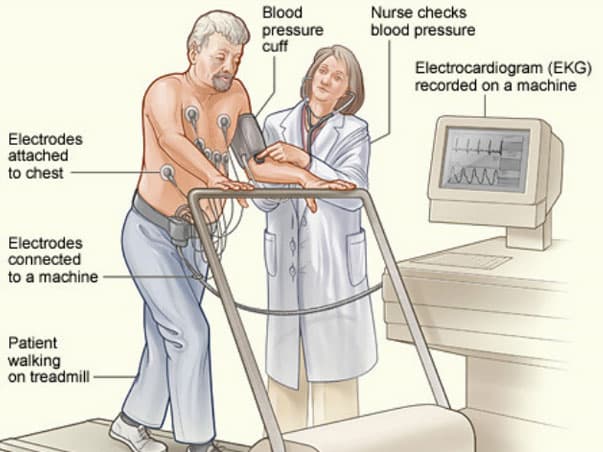
What is a stress test?
A stress test (or an ergometry) is used to determine how well your heart works during physical activity. During exercise, the body requires more oxygen and the heart has to work harder (beat faster) to deliver more oxygen to the exercising muscles. As a result the heart will also require more blood flow.
When the coronary arteries are blocked, the blood flow to the heart muscle is reduced. This reduced flow causes the involved muscle to "starve" during exercise. The "starvation" may produce symptoms (like chest discomfort or inappropriate shortness of breath), and the ECG may produce characteristic abnormalities.
By monitoring the electrical signals of the heart as it beats faster, we can often see coronary problems which cannot be seen when the body is at rest.
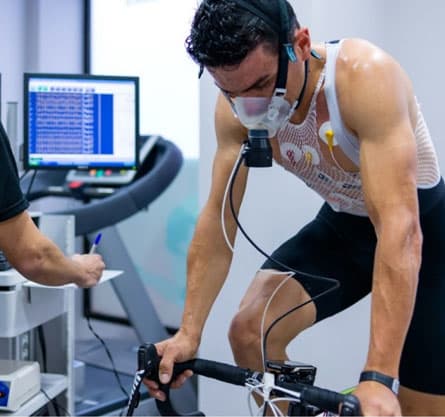
A regular stress test is considered:
✓ To evaluate if complaints of chest pain are related to the heart;
✓ To determine if arteries supplying the heart with oxygen-rich blood have blockages or narrowing;
✓ To identify an irregular heart rhythm that only occurs during activity;
✓ To monitor the heart's response to cardiac treatment or procedures;
✓ To evaluate exercise tolerance when patients have unexplained fatigue and shortness of breath;
✓ To evaluate blood pressure response to exercise in patients with borderline hypertension.
Because it is non-invasive, the stress test provides a safe and cost effective initial test for coronary disease.
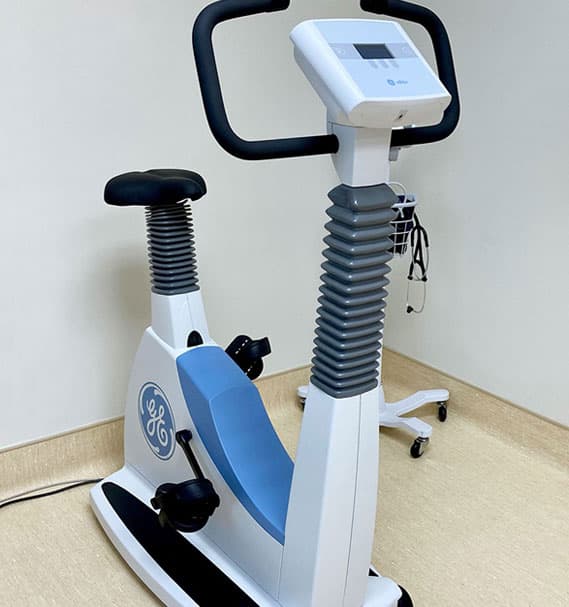
How does a stress test work?
The technician attaches ECG electrodes with wires attached to a computer to your chest. They will take your resting blood pressure and ECG readings.
You will then be asked to walk on a treadmill while your heart rate, blood pressure and electrocardiogram are monitored.
As the test progresses, the level of exertion is gradually increased. The ECG, blood pressure, and your symptoms are closely monitored.
At any stage you can tell the person doing the test if you feel it is too difficult, and the doctor will decide if the test will be stopped. The test may be stopped early if you have excessive fatigue, chest pain, shortness of breath, or any symptoms that suggest heart problems. Significant changes in the ECG will also stop the test.
After the exercise is completed, blood pressure, heart rate, and ECG monitoring continues until levels return to normal. After a short cooling down period, walking at a slow pace, you will rest on a stretcher during the remainder of the recovery phase.