
vestibular neuritis: what you need to know
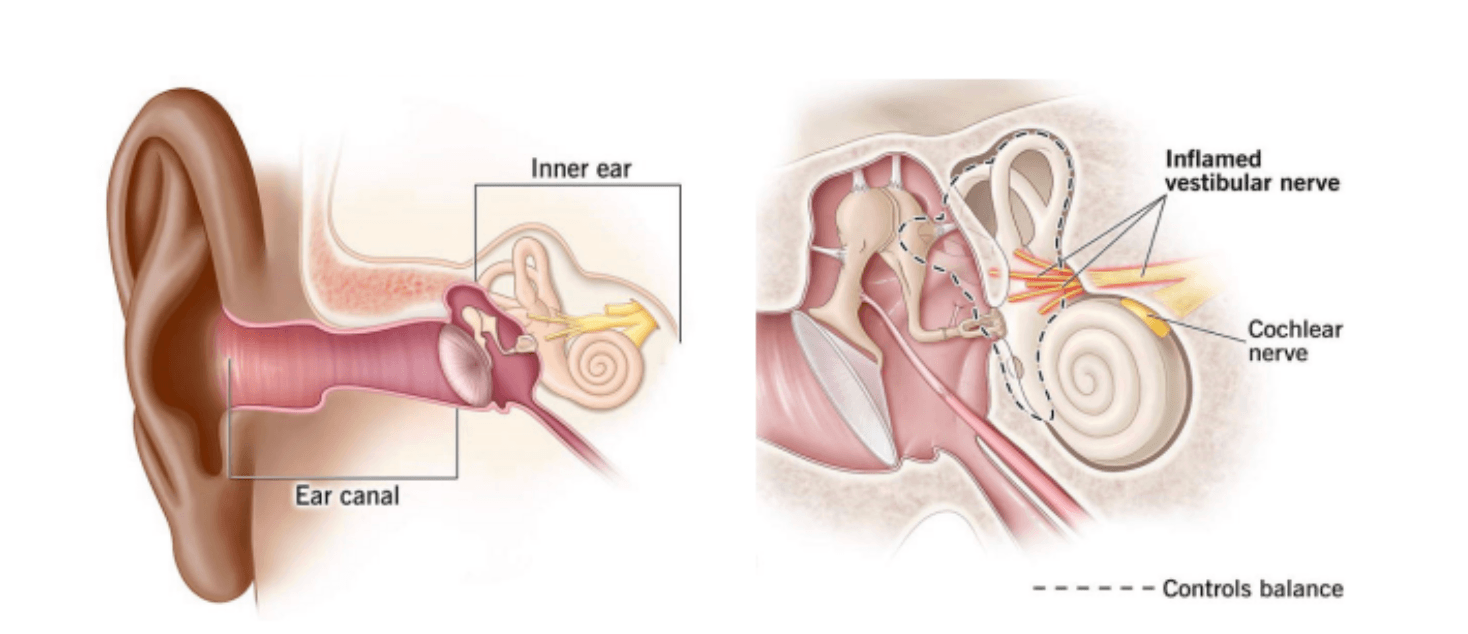
WHAT IS VESTIBULAR NEURITIS?
Vestibular neuritis is a disorder that affects the vestibulocochlear nerve of your inner ear. This nerve sends information about your balance and head position from the inner ear to the brain. When this nerve becomes inflamed or swollen, it interrupts the way the brain reads information. This results in dizziness, vertigo and other balance-related symptoms. Vestibular neuritis can occur in people of all ages, but it’s less common in children.
WHAT ARE THE SYMPTOMS?
Typically, people with vestibular neuritis go through an acute phase and a chronic phase. This means sudden, severe symptoms for about one week, followed by milder symptoms that last anywhere from a few weeks to several months. It’s rare, but some people develop long-term vestibular neuritis symptoms which last for years.
Acute vestibular neuritis
The initial phase of vestibular neuritis lasts up to a few days. Symptoms vary and may include:
- Sudden, severe vertigo (a spinning sensation);
- Intense dizziness (feeling lightheaded or unsteady);
- Severe balance issues;
- Nausea and vomiting;
- Difficulty concentrating;
- Severe motion sensitivity;
- Nystagmus, a condition where there is a loss of control in eye movements.
Chronic vestibular neuritis
The chronic phase of vestibular neuritis can last anywhere from a few weeks to several months and may include symptoms such as:
- Lightheadedness;
- Mild dizziness with head and body movements;
- Mild nausea;
- Some difficulty walking, especially in busy environments;
- A feeling of fullness in the ears;
- Mild motion sensitivity;Anxiety.
Keep in mind that vestibular neuritis symptoms vary from person to person. Symptoms will depend on several factors, including the exact cause, the area of nerve damage and a patient’s medical history.
WHAT IS THE CAUSE?
Experts believe vestibular neuritis results from viral infections that start in the inner ear or begin somewhere else in the body, like chickenpox or viral hepatitis. The condition itself isn’t contagious. In other words, persons can’t catch vestibular neuritis from someone else who has it. But persons can pass the viruses that cause vestibular neuritis to other people.
Risk Factors:
- Flu (influenza);
- COVID-19;
- Herpes simplex virus type 1 (cold sores);
- Hepatitis;
- Polio;
- Measles;
- Mumps.

WHAT TREATMENT OPTIONS ARE AVAILABLE?
There is currently no cure for this disorder. However, doctors can prescribe a variety of medications to reduce the symptoms of vestibular neuritis, such as:
- Anti-nausea medications;
- Drugs to reduce dizziness;
- Drugs to reduce inflammation;
- Antiviral medications.
Despite medicinal treatment, training your balance through movement can help the symptoms disappear more quickly. If you continue to experience dizziness or balance problems, specialized physiotherapy can be recommended by your physician. Symptoms usually subside within a few days to weeks.
COMPREHENSIVE AND COMPASSIONATE CARE
At SMMC, our goal is to improve your quality of life through personalized, compassionate care. From diagnosis to treatment, we are here to support you every step of the way. For more information, please contact the Neurology Department using the information on the back of this brochure.